Showing posts with label nursing guide. Show all posts

Saturday, October 8, 2011

The 4 Cs of Cardiac Arrest Care

The 4 Cs of Cardiac Arrest Care according to the 2010 A.H.A Guidelines

Field JM, Hazinski MF, Sayre MR, et al
Circulation. 2010;122:S640-S656
The year 2010 marks the 50th anniversary of the introduction of cardiopulmonary resuscitation (CPR). During these past 50 years, tremendous research has been conducted to evaluate techniques, medications, and devices designed to advance the care of victims of cardiac arrest. The American Heart Association (AHA) developed the first CPR guidelines in 1966 and since that time has published frequent updates of the guidelines to help educate the public and medical establishment about optimal care for patients with cardiac arrest and other emergency cardiovascular conditions.
This past November, the newest set of guidelines pertaining to CPR and emergency cardiovascular care were published by the AHA in a supplement issue of Circulation. The guidelines consist of 16 parts. They address not only cardiac arrest, but also post-arrest care, dysrhythmias, acute coronary syndromes, stroke, cardiac arrest in special situations (eg, pregnancy, pulmonary embolism, etc), pediatric considerations, and ethics. Part I is a summary statement of the major changes in cardiac arrest and emergency cardiovascular care since the previous set of guidelines, which were published in 2005. The highlights of this "Executive Summary" are summarized below. For purposes of brevity, this discussion will focus on adult patients with acute cardiac conditions (cardiac arrest and dysrhythmias), excluding acute coronary syndromes, stroke, and pediatric considerations. The reader should note that the bulk of guideline recommendations, as in past years, are concentrated on victims of primary cardiac arrest and are not necessarily relevant to victims of pulmonary arrest (eg, drowning, drug overdose, etc).

Study Summary

Change from "A-B-C" to "C-A-B." A major change in basic life support is a step away from the traditional approach of airway-breathing-chest compressions (taught with the mnemonic "A-B-C") to first establishing good chest compressions ("C-A-B"). There are several reasons for this change.
  • Most survivors of adult cardiac arrest have an initial rhythm of ventricular fibrillation (VF) or pulseless ventricular tachycardia (VT), and these patients are best treated initially with chest compressions and early defibrillation rather than airway management.
  • Airway management, whether mouth-to-mouth breathing, bagging, or endotracheal intubation, often results in a delay of initiation of good chest compressions. Airway management is no longer recommended until after the first cycle of chest compressions -- 30 compressions in 18 seconds. The 30 compressions are now recommended to precede the 2 ventilations, which previous guidelines had recommended at the start of resuscitation.
  • Only a minority of cardiac arrest victims receive bystander CPR. It is believed that a significant obstacle to bystanders performing CPR is their fear of doing mouth-to-mouth breathing. By changing the initial focus of resuscitation to chest compressions rather than airway maneuvers, it is thought that more patients will receive important bystander intervention, even if it is limited to chest compressions.
Basic life support. The traditional recommendation of "look, listen, and feel" has been removed from the basic life support algorithm because the steps tended to be time-consuming and were not consistently useful. Other recommendations:
  • Hands-only CPR (compressions only -- no ventilations) is recommended for the untrained lay rescuers to obviate their fears of mouth-to-mouth ventilations and to prevent delays/interruptions in compressions.
  • Pulse checks by lay rescuers should not be attempted because of the frequency of false-positive findings. Instead, it is recommended that lay rescuers should just assume that an adult who suddenly collapses, is unresponsive and not breathing normally (eg, gasping) has had a cardiac arrest, activate the emergency response system, and begin compressions.
  • Pulse checks by healthcare providers have been de-emphasized in importance. These pulse checks are often inaccurate and produce prolonged interruptions in compressions. If pulse checks are performed, healthcare providers should take no longer than 10 seconds to determine if pulses are present. If no pulse is found within 10 seconds, compressions should resume immediately.
  • The use of end-tidal CO2 (ETCO2) monitoring is a valuable adjunct for healthcare professionals. When patients have no spontaneous circulation, the ETCO2 is generally ≤ 10 mm Hg. However, when spontaneous circulation returns, ETCO2 levels are expected to abruptly increase to at least 35-40 mm Hg. By monitoring these levels, interruptions in compressions for pulse checks become unnecessary.
CPR devices. Several devices have been studied in recent years, including the impedance threshold device and load-distributing band CPR. No improvements in survival to hospital discharge or neurologic outcomes have been proven with any of these devices when compared with standard, conventional CPR.
Electrical therapies
  • Patients with VF or pulseless VT should receive chest compressions until a defibrillator is ready. Defibrillation should then be performed immediately.
  • Chest compressions for 1.5-3 minutes before defibrillation in patients with cardiac arrest longer than 4-5 minutes have been recommended in the past, but recent data have not demonstrated improvements in outcome.
  • Transcutaneous pacing of patients who are in asystole has not been found to be effective and is no longer recommended.
Advanced cardiac life support. Good basic life support, including high-quality chest compressions and rapid defibrillation of shockable rhythms, is again emphasized as the foundation of successful advanced cardiac life support. The recommendations for airway management have undergone 2 major changes: (1) the use of quantitative waveform capnography for confirmation and monitoring of endotracheal tube placement is now a class I recommendation in adults; and (2) the routine use of cricoid pressure during airway management is no longer recommended.
As they did in 2005, the AHA acknowledges once again that as of 2010, data are "still insufficient ...to demonstrate that any drugs improve long-term outcome after cardiac arrest."
Several important changes in recommendations for dysrhythmia management have occurred:
  • For symptomatic or unstable bradydysrhythmias, intravenous infusion of chronotropic agents (eg, dopamine, epinephrine) is now recommended as an equally effective alternative therapy to transcutaneous pacing when atropine fails;
  • As noted above, transcutaneous pacing for asystole is no longer recommended; and
  • Atropine is no longer recommended for routine use in patients with pulseless electrical activity or asystole.
Post-cardiac arrest care. Post-cardiac arrest care has received a great deal of focus in the current guidelines and is probably the most important new area of emphasis. There are several key highlights of post-arrest care:
  • Induced hypothermia, although best studied in survivors of VF/pulseless VT arrest, is generally recommended for adult survivors of cardiac arrest who remain unconscious, regardless of presenting rhythm. Hypothermia should be initiated as soon as possible after return of spontaneous circulation with a target temperature of 32°C-34°C.
  • Urgent cardiac catheterization and percutaneous coronary intervention are recommended for cardiac arrest survivors who demonstrate ECG evidence of ST-segment elevation acute myocardial infarction regardless of neurologic status. There is also increasing support for patients without ST-segment elevation on ECG who are suspected of having acute coronary syndrome to receive urgent cardiac catheterization.
  • Hemodynamic optimization to maintain vital organ perfusion, avoidance of hyperventilation, and maintenance of euglycemia are also critical elements in post-arrest care.

Viewpoint

The AHA 2010 guidelines represent significant progress in the care of victims of cardiac arrest. Most important is the stronger emphasis on post-cardiac arrest care. Induced hypothermia is underscored, and perhaps the most important advance is the recommendation for urgent percutaneous coronary intervention in survivors of cardiac arrest. The wealth of data thus far indicate that post-arrest percutaneous coronary intervention may be the most significant advance toward improving survival and neurologic function since defibrillation was first introduced decades ago.
In reviewing these guidelines, I must admit, however, that I was disappointed that AHA hesitated to adopt the concepts of "cardiocerebral resuscitation" (CCR). CCR also promotes the "C-A-B" approach to resuscitation, but it fosters even further delays in airway intervention -- withholding any form of positive pressure ventilations, in favor of persistent chest compressions, for as long as 5-10 minutes after the cardiac arrest. The current guidelines recommend withholding positive pressure ventilation for a mere 18 seconds. First described in 2002,[1] CCR has been studied more recently as well and demonstrated marked improvements in rates of resuscitation and neurologic survival.[2-4] I think that CCR should be incorporated into basic life support protocols for victims of primary cardiac arrest as quickly as possible to further improve outcomes.
Optimal management of cardiac arrest in the current decade can be summarized simply by "the 4 Cs": Cardiovert/defibrillate, CCR, Cooling, and Catheterization.


Saturday, January 29, 2011

STERILIZATION METHODS


What methods are available for surgical sterilization?
               
Male: vasectomyligation of vas  deferens preventing passage of sperm into seminal fluid
Female: 1. Ligation/removal of a section of the   fallopian tubeinvolves laparotomy or laparoscopy
        2. Mechanical blockage— using rings, coils, clips, or plugs
        3. Coagulation-induced blockage—usually through cauterization methods

What are the overall risks and benefits of female sterilization?   
Risks: 1. Anesthesia/surgical complications
        2. Ectopic pregnancyfailed procedures can result in an increased risk of ectopic pregnancies
       3. Regret of the procedure (especially in younger people)
       4. Does not stop the spread of HIV or other STIs Benefits:

1. Not coitally dependent
2. Decreased risk of ovarian  cancer
3. No evidence of menstrual irregularity or dysmenorrhea


What are the risks and benefits of each of the female sterilization procedures?

Ligation is one of the oldest methods of sterilization with the lowest failure rate (0.8%) but it is not easily reversed
Mechanical blockage with a clip is the most readily reversed method but it also has the highest failure rate (3.7%)
Coagulation-induced blockage with electrocautery is the fastest procedure with a low failure rate (2.5%), but there is increased  risk of electrical damage to  surrounding structures

What are some advantages and disadvantages of a vasectomy?               
Advantages: effectiveness is very hightypical first-year failure  rate 0.15%; simpler, surgically  safer, more cost-effective than  female sterilization; Males   share contraception  responsibility with females 
Disadvantages: does not protect against STIs

Is reversibility after a female sterilization procedure and vasectomy possible?
Reversibility after a female  sterilization procedure is generally very difficult and has been reported as only 60% effective.
As for vasectomy, men are generally counseled  that it is permanent. About 50–70% of  men who have a reversal become fertile.   The chance of becoming fertile decreases with increasing time after the procedure

If a woman in her early twenties with two  children requests tubal sterilization, what is the next appropriate recommendation?
Considering the womans age, you  must inform her of the risk for regret of the procedure and of the permanence  of tubal sterilization/ difficulty of reversal

Thursday, January 13, 2011


"Importance of having Breakfast"
Breakfast can help prevent strokes, heart attack and sudden death. Advice on not to skip breakfast! Healthy living. For those who always skip breakfast, you should stop that habit now! You've heard many times that "Breakfast is the most important meal of the day. Now, recent research confirms that one of the worst practices you can develop may be avoiding breakfast. Why?


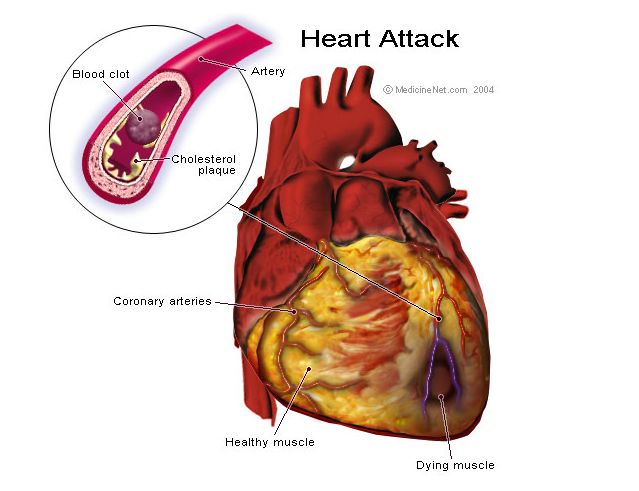
 Because the frequency of heart attack, sudden death, and stroke peaks between 6: 00a.m. and noon, with the highest incidence being between 8: 00a.m. and 10:00a.m.What mechanism within the body could account for this significant jump in sudden death in the early morning hours? We may have an Answer. Platelet, tiny elements in the blood that keep us from bleeding to Death if we get a cut, can clump together inside our arteries due to Cholesterol or plaque buildup in the artery lining. It is in the morning hours that platelets become the most activated and tend to form these internal blood clots at the greatest frequency.
However, eating even a very light breakfast prevents the morning platelet activation that is associated with heart attacks and strokes. Studies performed at Memorial University in St.Johns,   Newfoundland found that eating a light, very low-fat breakfast was critical in modifying the morning platelet activation. Subjects in the study consumed either low-fat or fat-free yogurt, orange juice, fruit, and a source of protein coming from yogurt or fat-free milk. So if you skip breakfast, it's important that you change this practice immediately in light of this research. Develop a simple plan to eat cereal, such as oatmeal or Bran Flakes, along with six ounces of grape juice or orange juice, and perhaps a piece of fruit. This simple plan will keep your platelets from sticking together, keep blood clots from forming, and perhaps head off a potential Heart Attack or stroke. So never ever skip breakfast

Wednesday, December 29, 2010

TIPS on how to answer questions during a job interview

hi, I came across lately about an article from my favorite website which I will be posting at the bottom about questions frequently asked during an interview and how to answer them. Happy 2011!!!


TIP: The 25 most difficult questions you'll be asked on a job interview

1. Tell me about yourself.
Since this is often the opening question in an interview, be extra careful that you don't run off at the mouth. Keep your answer to a minute or two at most. Cover four topics: early years, education, work history, and recent career experience. Emphasize this last subject. Remember that this is likely to be a warm-up question. Don't waste your best points on it.

2. What do you know about our organization?
You should be able to discuss products or services, revenues, reputation, image, goals, problems, management style, people, history and philosophy. But don't act as if you know everything about the place. Let your answer show that you have taken the time to do some research, but don't overwhelm the interviewer, and make it clear that you wish to learn more.
You might start your answer in this manner: "In my job search, I've investigated a number of companies.
Yours is one of the few that interests me, for these reasons..."
Give your answer a positive tone. Don't say, "Well, everyone tells me that you're in all sorts of trouble, and that's why I'm here", even if that is why you're there.

3. Why do you want to work for us?
The deadliest answer you can give is "Because I like people." What else would you like-animals?
Here, and throughout the interview, a good answer comes from having done your homework so that you can speak in terms of the company's needs. You might say that your research has shown that the company is doing things you would like to be involved with, and that it's doing them in ways that greatly interest you. For example, if the organization is known for strong management, your answer should mention that fact and show that you would like to be a part of that team. If the company places a great deal of emphasis on research and development, emphasize the fact that you want to create new things and that you know this is a place in which such activity is encouraged. If the organization stresses financial controls, your answer should mention reverence for numbers.
If you feel that you have to concoct an answer to this question - for example, the company stresses research, and you feel that you should mention it even though it really doesn't interest you- then you probably should not be taking that interview, because you probably shouldn't be considering a job with that organization.
Your homework should include learning enough about the company to avoid approaching places where you wouldn't be able -or wouldn't want- to function. Since most of us are poor liars, it's difficult to con anyone in an interview. But even if you succeed at it, your prize is a job you don't really want.

4. What can you do for us that someone else can't?
Here you have every right, and perhaps an obligation, to toot your own horn and be a bit egotistical. Talk about your record of getting things done, and mention specifics from your resume or list of career accomplishments. Say that your skills and interests, combined with this history of getting results, make you valuable. Mention your ability to set priorities, identify problems, and use your experience and energy to solve them.

5. What do you find most attractive about this position? What seems least attractive about it?
List three or four attractive factors of the job, and mention a single, minor, unattractive item.

6. Why should we hire you?
Create your answer by thinking in terms of your ability, your experience, and your energy. (See question 4.)

7. What do you look for in a job?
Keep your answer oriented to opportunities at this organization. Talk about your desire to perform and be recognized for your contributions. Make your answer oriented toward opportunity rather than personal security.

8. Please give me your definition of [the position for which you are being interviewed] .
Keep your answer brief and task-oriented. Think in in terms of responsibilities and accountability. Make sure that you really understand what the position involves before you attempt an answer. If you are not certain,ask the interviewer; he or she may answer the question for you.

9. How long would it take you to make a meaningful contribution to our firm?
Be realistic. Say that, while you would expect to meet pressing demands and pull your own weight from the first day, it might take six months to a year before you could expect to know the organization and its needs well enough to make a major contribution.

10. How long would you stay with us?
Say that you are interested in a career with the organization, but admit that you would have to continue to feel challenged to remain with any organization. Think in terms of, "As long as we both feel achievement- oriented."

11. Your resume suggests that you may be over-qualified or too experienced for this position. What's Your opinion?
Emphasize your interest in establishing a long-term association with the organization, and say that you assume that if you perform well in his job, new opportunities will open up for you. Mention that a strong company needs a strong staff. Observe that experienced executives are always at a premium. Suggest that since you are so well qualified, the employer will get a fast return on his investment. Say that a growing, energetic company can never have too much talent.

12. What is your management style?
You should know enough about the company's style to know how your management style will complement it. Possible styles include: task oriented (I'll enjoy problem-solving:identifying what's wrong, choosing a solution and implementing it"), result-oriented ("Every management decision I make is determined by how it will affect the bottom line"), or even paternalistic ("I'm committed to taking care of my subordinates and pointing them in the right direction").
A participative style is currently quite popular: an open-door method of managing in which you get things done by motivating people and delegating responsibility.
As you consider this question, think about whether your style will let you work happily and effectively within the organization.

13. Are you a good manager? Can you give me some examples? Do you feel that you have top managerial potential?
Keep your answer achievement and ask-oriented. Rely on examples from your career to buttress your argument. Stress your experience and your energy.

14. What do you look for when You hire people?
Think in terms of skills, initiative, and the adaptability to be able to work comfortably and effectively with others. Mention that you like to hire people who appear capable of moving up in the organization.

15. Have you ever had to fire people? What were the reasons, and how did you handle the situation?
Admit that the situation was not easy, but say that it worked out well, both for the company and, you think, for the individual. Show that, like anyone else, you don't enjoy unpleasant tasks but that you can resolve them efficiently and -in the case of firing someone- humanely.

16. What do you think is the most difficult thing about being a manager or executive?
Mention planning, execution, and cost-control. The most difficult task is to motivate and manage employees to get something planned and completed on time and within the budget.

17. What important trends do you see in our industry?
Be prepared with two or three trends that illustrate how well you understand your industry. You might consider technological challenges or opportunities, economic conditions, or even regulatory demands as you collect your thoughts about the direction in which your business is heading.

18. Why are you leaving (did you leave) your present (last) job?
Be brief, to the point, and as honest as you can without hurting yourself. Refer back to the planning phase of your job search where you considered this topic as you set your reference statements. If you were laid off in an across-the-board cutback, say so; otherwise, indicate that the move was your decision, the result of your action. Do not mention personality conflicts.
The interviewer may spend some time probing you on this issue, particularly if it is clear that you were terminated. The "We agreed to disagree" approach may be useful. Remember that your references are likely to be checked, so don't concoct a story for an interview.

19. How do you feel about leaving all your benefits to find a new job?
Mention that you are concerned, naturally, but not panicked. You are willing to accept some risk to find the right job for yourself. Don't suggest that security might interest you more than getting the job done successfully.

20. In your current (last) position, what features do (did) you like the most? The least?
Be careful and be positive. Describe more features that you liked than disliked. Don't cite personality problems. If you make your last job sound terrible, an interviewer may wonder why you remained there until now.

21. What do you think of your boss?
Be as positive as you can. A potential boss is likely to wonder if you might talk about him in similar terms at some point in the future.

22. Why aren't you earning more at your age?
Say that this is one reason that you are conducting this job search. Don't be defensive.

23. What do you feel this position should pay?
Salary is a delicate topic. We suggest that you defer tying yourself to a precise figure for as long as you can do so politely. You might say, "I understand that the range for this job is between $______ and $______. That seems appropriate for the job as I understand it." You might answer the question with a question: "Perhaps you can help me on this one. Can you tell me if there is a range for similar jobs in the organization?"
If you are asked the question during an initial screening interview, you might say that you feel you need to know more about the position's responsibilities before you could give a meaningful answer to that question. Here, too, either by asking the interviewer or search executive (if one is involved), or in research done as part of your homework, you can try to find out whether there is a salary grade attached to the job. If there is, and if you can live with it, say that the range seems right to you.
If the interviewer continues to probe, you might say, "You know that I'm making $______ now. Like everyone else, I'd like to improve on that figure, but my major interest is with the job itself." Remember that the act of taking a new job does not, in and of itself, make you worth more money.
If a search firm is involved, your contact there may be able to help with the salary question. He or she may even be able to run interference for you. If, for instance, he tells you what the position pays, and you tell him that you are earning that amount now and would Like to do a bit better, he might go back to the employer and propose that you be offered an additional 10%.
If no price range is attached to the job, and the interviewer continues to press the subject, then you will have to respond with a number. You cannot leave the impression that it does not really matter, that you'll accept whatever is offered. If you've been making $80,000 a year, you can't say that a $35,000 figure would be fine without sounding as if you've given up on yourself. (If you are making a radical career change, however, this kind of disparity may be more reasonable and understandable. )
Don't sell yourself short, but continue to stress the fact that the job itself is the most important thing in your mind. The interviewer may be trying to determine just how much you want the job. Don't leave the impression that money is the only thing that is important to you. Link questions of salary to the work itself.
But whenever possible, say as little as you can about salary until you reach the "final" stage of the interview process. At that point, you know that the company is genuinely interested in you and that it is likely to be flexible in salary negotiations.

24. What are your long-range goals?
Refer back to the planning phase of your job search. Don't answer, "I want the job you've advertised." Relate your goals to the company you are interviewing: 'in a firm like yours, I would like to..."

25. How successful have you been so far?
Say that, all-in-all, you're happy with the way your career has progressed so far. Given the normal ups and downs of life, you feel that you've done quite well and have no complaints.
Present a positive and confident picture of yourself, but don't overstate your case. An answer like, "Everything's wonderful! I can't think of a time when things were going better! I'm overjoyed!" is likely to make an interviewer wonder whether you're trying to fool him . . . or yourself. The most convincing confidence is usually quiet confidence.

http://symbianize.com/showthread.php?t=320717

.

Saturday, December 25, 2010

CANADIAN IMMIGRATION NEWS


Canada favored immigration destination in 2011

Thursday, 25 November 2010
According to Canadian Government officials, immigration levels will be higher than ever as the population ages and the birth rates stay low. Citizenship, Immigration and Multiculturalism Minister Jason Kenney, expects between 240,000 and 265,000 new permanent residents in 2011.


"Canada's post recession economy demands a high level of legal immigration to keep our workforce strong. All of the country's labor force growth will come from immigration within the next five years," said Kenney.
Expectations in 2011 show the Federal Skilled Worker Programme to be the most popular means of entry. An estimated 25% of newcomers will be destined for provinces outside of Ontario, British Columbia and Quebec; this is an increase from 1997 at 11%. The Federal Skilled Worker Programme accepts workers in such fields as technicians, skilled tradespersons, managers and professionals.
Canada has shown to be a popular immigration destination for Irish immigrants. As there has been a significant influx of Irish expats looking for jobs abroad, finding significant success in Canada. Those looking for jobs in Canada are quite varied from mechanical engineers, IT system analysts, construction managers, accountants and marketing executives. Irish companies are also looking to the Canadian market as more than 220 Irish companies sell goods and services into Canada, with an additional 45 Irish companies operating offices and facilities in Canada.
Recently, the largest Irish trade mission in history was led by Mary Coughlan, Irish Minister for Enterprise, Trade and Employment, to Canada, visiting Edmonton, Toronto and Ottawa. The missions focus was to demonstrate and promote the success of world-class Irish companies that have had a break through into the Canadian market.
If you are interested in Immigration to Canada, contact Migration Expert for information and advice on which visa is best suited to you. You can also try our visa eligibility assessment to see if you are eligible to apply for a visa to Canada.

Thursday, December 9, 2010

Nursing Diagnosis: Ineffective Coping

NANDA Definition: Inability to form a valid appraisal of internal or external stressors, inadequate choices of practiced responses, and/or inability to access or use available resources

Defining Characteristics: Lack of goal-directed behavior or resolution of problem, including inability to attend; difficulty with organized information; sleep disturbance; abuse of chemical agents; decreased use of social support; use of forms of coping that impede adaptive behavior; poor concentration; fatigue; inadequate problem solving; verbalized inability to cope or ask for help; inability to meet basic needs; destructive behavior toward self or others; inability to meet role expectations; high illness rate; change in usual communication patterns; risk taking

Related Factors: Gender differences in coping strategies; inadequate level of confidence in ability to cope; uncertainty; inadequate social support created by characteristics of relationships; inadequate level of perception of control; inadequate resource availability; high degree of threat; situational crises; maturational crises; disturbance in pattern of tension release; inadequate opportunity to prepare for stressor; inability to conserve adaptive energies; disturbance in pattern of appraisal of threat; chronic conditions; alteration in body integrity; cultural variables


Client Outcomes

1. Verbalize ability to cope and ask for help when needed
2. Demonstrate ability to solve problems related to current needs
3. Remain free of destructive behavior toward self or others
4. Communicate needs and negotiate with others to meet needs
5. Discuss how recent life stressors have overwhelmed normal coping strategies
6. Demonstrate new effective coping strategies
7. Have illness and accident rates not excessive for age and developmental level


Nursing Interventions and Rationales

  • Observe for causes of ineffective coping such as poor self-concept, grief, lack of problem-solving skills, lack of support, or recent change in life situation. 
  • Observe for strengths such as the ability to relate the facts and to recognize the source of stressors. 
  • Assess the risk of the client's harming self or others and intervene appropriately.
  • Help the client set realistic goals and identify personal skills and knowledge. 
  • Use empathetic communication and encourage the client and family to verbalize fears, express emotions, and set goals. 
  • Encourage the client to make choices and participate in the planning of care and scheduled activities. 
  • Provide mental and physical activities within the client's ability (e.g., reading, television, radio, crafts, outings, movies, dinners out, social gatherings, exercise, sports, games). 
  • If the client is physically able, encourage moderate aerobic exercise.
  • Provide information regarding care before care is given. Adequate information and training before and after treatment reduces anxiety and fear (Herranz and Gavilan, 1999).
  • Discuss changes with the client before making them. 
  • Discuss the client's and family's power to change a situation or the need to accept a situation. 
  • Use active listening and acceptance to help the client express emotions such as sadness, guilt, and anger (within appropriate limits). 
  • Encourage the client to describe previous stressors and the coping mechanisms used. 
  • Be supportive of coping behaviors; allow the client time to relax. 
  • Help the client to define what meaning his or her symptoms might have for the client. 
  • Encourage the use of cognitive behavioral relaxation (e.g., music therapy, guided imagery). 
  • Use distraction techniques during procedures that cause the client to be fearful. Distraction is used to direct attention toward a pleasurable experience and block the attention to the feared procedure (DuHamel, Redd, and Johnson-Vickberg, 1999).
  • Use systematic desensitization when introducing new people, places, or procedures that may cause fear and altered coping. Fear of new things diminishes with repeated exposure (DuHamel, Redd, and Johnson-Vickberg, 1999).
  • Provide the client and/or family with a video of any feared procedure to view before the procedure. Ensure that the video shows a client of similar age and background. Videos provide the client and/or family with the information necessary to eliminate fear of the unknown (DuHamel, Redd, and Johnson-Vickberg, 1999).
  • Refer for counseling as needed. 
    Geriatric
  • Engage the client in reminiscence. Reminiscence activates positive memories and evokes well-being (Puentes, 2002).
  • Assess and report possible physiological alterations (e.g., sepsis, hypoglycemia, hypotension, infection, changes in temperature, fluid and electrolyte imbalances, and use of medications with known cognitive and psychotropic side effects). 
  • Determine if the individual is displaying a change in personality as a manifestation of difficulty with coping. An older individual's responses to age-related stress will depend on the balance of personality strengths and weaknesses. 
  • Increase and mobilize the support available to the elderly client. Encourage interaction with family and friends.
    Multicultural
  • Assess for the influence of cultural beliefs, norms, and values on the client's perceptions of effective coping. 
  • Assess for intergenerational family problems that can overwhelm coping abilities. 
  • Encourage spirituality as a source of support for coping. 
  • Negotiate with the client with regard to the aspects of coping behavior that will need to be modified. 
  • Identify which family members the client can count on for support. 
  • Use an empowerment framework to redefine coping strategies. 
  • Assess the influence of fatalism on the client's coping behavior. 
  • Assess the influence of cultural conflicts that may affect coping abilities.

    Home Care Interventions

    • The interventions described previously may be adapted for home care use.
    • Observe the family for coping behavior patterns. Obtain family and client history as possible. 
    • Assess for suicidal tendencies. Refer for mental health care immediately if indicated. Identify an emergency plan should the client become suicidal. Ineffective coping can occur in a crisis situation and can lead to suicidal ideation if the client sees no hope for a solution. A suicidal client is not safe in the home environment unless supported by professional help.
    • Encourage the client to use self-care management to increase the experience of personal control. Identify with the client all available supports and sense of attachment to others.
    • Refer to medical social services for evaluation and counseling, which will promote adequate coping as part of the medical plan of care. If no primary medical diagnosis has been made, request medical social services to assist with community support contacts. If the client is involved with the mental health system, actively participate in mental health team planning. Based on knowledge of the home and family, home care nurses can often advocate for clients. These nurses are frequently requested to monitor medication use and therefore need to know the plan of care.
    • Refer the client and family to support groups. 
    • If monitoring medication use, contract with the client or solicit assistance from a responsible caregiver. Prepouring of medications may be helpful with some clients. Caregivers in the home benefit from interventions that promote self-efficacy and provide a nurse for support (Dibartolo, 2002).
    • Institute case management for frail elderly clients to support continued independent living. Difficulties in coping with changes in health care needs can lead to increasing needs for assistance in using the health care system effectively. Case management combines the nursing activities of client and family assessment, planning and coordination of care among all health care providers, delivery of direct nursing care, and monitoring of care and outcomes. These activities are able to address continuity of care, mutual goal setting, behavior management, and prevention of worsening health problems (Guttman, 1999).
    • If the client is homebound, refer for psychiatric home health care services for client reassurance and implementation of a therapeutic regimen. Psychiatric home care nurses can address issues relating to the client's ability to adjust to changes in health status. Behavioral interventions in the home can help the client to participate more effectively in the treatment plan (Patusky, Rodning, and Martinez-Kratz, 1996).
    • NOTE: All of the previously mentioned interventions may be applied in the home setting. Home care may offer psychiatric nursing or the services of a licensed clinical social worker under special programs. Traditionally, insurance does not reimburse for counseling that is not related to a medical plan of care unless it falls under one of the programs just described. Public health agencies generally do not have the clinical support needed to offer psychiatric nursing services to clients. Clients are usually treated in the ambulatory mental health system.

    Client/Family Teaching

  • Teach the client to problem solve. Have the client define the problem and cause, and list the advantages and disadvantages of the options. 
  • Provide the seriously ill client and his or her family with needed information regarding the condition and treatment. 
  • Teach relaxation techniques. 
  • Work closely with the client to develop appropriate educational tools that address individualized needs. 
  • Teach the client about available community resources (e.g., therapists, ministers, counselors, self-help groups). 

 Toy Story 3

Tuesday, December 7, 2010

Nursing Guide Reference

Nursing Guide Reference


Kindle Wireless Reading Device, Wi-Fi, Graphite, 6" Display with New E Ink Pearl Technology
Related Posts Plugin for WordPress, Blogger...

Chitika

My Blog List