Showing posts with label exercise. Show all posts

Thursday, January 13, 2011


"Importance of having Breakfast"
Breakfast can help prevent strokes, heart attack and sudden death. Advice on not to skip breakfast! Healthy living. For those who always skip breakfast, you should stop that habit now! You've heard many times that "Breakfast is the most important meal of the day. Now, recent research confirms that one of the worst practices you can develop may be avoiding breakfast. Why?


 Because the frequency of heart attack, sudden death, and stroke peaks between 6: 00a.m. and noon, with the highest incidence being between 8: 00a.m. and 10:00a.m.What mechanism within the body could account for this significant jump in sudden death in the early morning hours? We may have an Answer. Platelet, tiny elements in the blood that keep us from bleeding to Death if we get a cut, can clump together inside our arteries due to Cholesterol or plaque buildup in the artery lining. It is in the morning hours that platelets become the most activated and tend to form these internal blood clots at the greatest frequency.
However, eating even a very light breakfast prevents the morning platelet activation that is associated with heart attacks and strokes. Studies performed at Memorial University in St.Johns,   Newfoundland found that eating a light, very low-fat breakfast was critical in modifying the morning platelet activation. Subjects in the study consumed either low-fat or fat-free yogurt, orange juice, fruit, and a source of protein coming from yogurt or fat-free milk. So if you skip breakfast, it's important that you change this practice immediately in light of this research. Develop a simple plan to eat cereal, such as oatmeal or Bran Flakes, along with six ounces of grape juice or orange juice, and perhaps a piece of fruit. This simple plan will keep your platelets from sticking together, keep blood clots from forming, and perhaps head off a potential Heart Attack or stroke. So never ever skip breakfast

Wednesday, November 3, 2010

High Blood Pressure: Anyone?

High blood pressure has been known to affect alot of individuals throughout the world. It is known as the "silent killer". Its still considered as one of the causes of morbidity and mortality in the world. Here are some ways of reducing or preventing high blood pressure:
1. Garlic is a proven remedy for those exhibiting symptoms of high blood pressure but as garlic thins the blood consultation with your physician is recommended before treatment begins.

2. Fish oil has also been used effectively in high blood pressure treatment. Studies have shown that it is the docohexaenoic acid, or DHA, which is the active ingredient in the treatment of high blood pressure.
3. A potassium-rich diet Very often, blood pressure levels depend on the sodium/potassium ratio in the blood. If there is enough potassium in the blood, then it acts as a buffer and mitigates the effects of high sodium levels, known to increase blood pressure. Potassium rich food includes bananas, oranges and potatoes can therefore be a natural treatment for high blood pressure. Both children and adults should eat 4500 mg of potassium a day. A significant reduction in the symptoms of high blood pressure are seen when supplements like folic acid are added to the diet. Studies have showed positive results in smokers who were given a folic acid treatment for high blood pressure.

4. Exercise High blood pressure can be lowered by regular exercise, which in turn will help keep weight down. Research has shown that there can be a fall of 1 mm Hg in blood pressure for every 2lbs lost. Keep food intake at a reasonable level and ensure that through diet, exercise and supplementation, the medical treatment of high blood pressure may never become necessary.

Tuesday, November 2, 2010

Ways on how to easily remember clinical facts

1. To remember the difference between
transudate and exudate
, focus on
the prefixes …
• Trans- means “across,” as in the
transcontinental railroad
• Ex- means “out of,” as in exhale.

2. To remember the difference between
aerobic and anaerobic, think of jogging …

• When you jog, an aerobic activity, your
body needs oxygen, or air— aerobic means
oxygen is required.
• Anaerobic means without oxygen.

3. To remember what allergies to ask your
patient about before a CT scan that
requires contrast medium, think of SIC …

Shellfish
Iodine
Contrast media (prior sensitive reaction).

4. To remember the signs and symptoms
of a hypersensitivity reaction to contrast
media, think PURR …

Pruritus
Urticaria
Rash
Respiratory distress.

5. To remember what to assess when
evaluating a skin lesion, think of A, B, C, D …

A for asymmetry
B for border
C for color and configuration
D for diameter and drainage.

6. To remember that cones are cells in
the eyes that respond to color, think of
brightly colored ice cream cones.


7. To remember which direction to move
the syringe when you want to slow down
the flow through the tube, think of …

• lower is slower, or …
• slow DOWN.

8. To remember the meaning of myasthenia
gravis …

think of grave muscle weakness.

9. To remember the progression of ARDS,
think of …

Assault to the pulmonary system
Respiratory distress
Decreased lung compliance
Severe respiratory failure.

10. To remember the progression of
signs and symptoms of Lyme disease,
remember LIME …

Lesions, lymph node swelling, like the flu (Stage 1)
Innervation problems, such as meningitis and
peripheral neuropathy (Stage 2)
Movement problems, such as arthritis (Stage 3)
Everything else, such as myocarditis and
arrhythmia (Stage 3).

11. To remember the difference between
depolarization and repolarization, think of …
the R in repolarization as standing for Rest.

Repolarization is the resting phase of the
cardiac cycle.

12. When performing an assessment, remember
this CAUTION from the American Cancer
Society…

Change in bowel or bladder habits
A sore that doesn’t heal
Unusual bleeding or discharge
Thickening or lump
Indigestion or difficulty swallowing
Obvious changes in a wart or mole
Nagging cough or hoarseness.

13. To remember the four causes of cell injury,
think of how the injury tipped (or TIPD)
the scale of homeostasis …

Toxin or other lethal (cytotoxic) substance
Infection
Physical insult or injury
Deficit or lack of water, oxygen, or nutrients.

14. When combining insulins, to remember
which to draw first, think of

“clear before cloudy.”
Who doesn’t prefer a clear day to a cloudy one?

15. Remember this jingle when
converting inches to centimeters …
“ 2.54, that’s 1 inch and no more.”


16. Remember that X factor is often used to
describe a person or event that could cause
uneXpected, or unknown, outcomes.

Keep this in mind when performing dosage
calculations and you’ll remember that X
represents the unknown part of a ratio or fraction.

17. To remember the conditions that affect
the length of patient stay, think of FOCUS …

Functional skills (and disabilities)
Other diseases
Chronicity
Urgency of needs
Support of systems.

18. To remind yourself of the need to
check and adjust flow rates, remember
the following tongue twister …

Fight fickle flow with frequent follow-up.

19. To remember which drugs can be given
safely through an endotracheal tube, think
of ALE…

Atropine
Lidocaine
Epinephrine.

20. To remember which drug should be
inhaled FIRST, think about your ABCs…

A Bronchodilator comes before a Corticosteroid.

21. When using an IN-LINE nebulizer,
remember to…
connect it to the IN-SPIRATORY side
of the ventilatory circuit.

Sunday, October 31, 2010

Ways on how to gain weight

As requested,Ive researched on some tips on how to gain weight safely:

Tip 1:Eat the Right Foods
The most obvious way to gain weight is by increasing your food intake. But don’t binge on those Krispy Kremes just yet. Yes, you can easily gain weight by eating donuts and other junk food, but that’s not a healthy way to do it. You’ll consume lots of fats and sugars, and that’s not good for your body. Choose healthier food options instead: lean meats, poultry, fish, vegetables, fruits, and whole grains. This way you’ll get all the nutrition your body needs.

How To Do It: Do a health and wellness assessment first. If possible, approach a nutritionist about it. You need to find out your height, weight, and describe your lifestyle (e.g. eating habits, leisure activities). Based on all these information, the nutritionist will recommend the foods you should consume and how often you should eat.

Possible Problems: You might be exposed to unhealthy foods at home or when you’re dining out. Just control your junk food cravings (say “no" to pizza). Also, managing your calorie intake could be a daunting task, so just be particular about your diet.

Tip 2: Cut out the Bad Fat!

Avoid trans fats like the plaque, and go for the “good fats”. Yes, you want to gain weight, however you don’t want to gain weight that is in fact just fat. So, cut out the cakes, chips and candy. No more visits to McDonalds and steer clear of anything fried. High protein low fat foods like tuna fish (and other seafood), chicken breast, turkey, lean meats, fruits and vegetables etc, are the good clean foods to eat.

Tip 3: Get Drinking!

Drink around a half gallon of water a day and even more if you can. Sure, that’s a lot of water, but believe it or not, it’s that water you need for the energy you need to gain weight! Dehydration can lead to all sorts of health problems, including less stamina at the gym.

Tip 4: Sleep more

Get lots of sleep. This is one of the easiest yet most neglected weight gain tips. Sleep for a minimum of 8 hours night. You’re body needs it to function properly.

Tip 5: Lift

Get in the gym and lift! This is another important step in how to gain weight, so make sure you are doing it correctly. Try at least to increase your protein intake and add some resistance training on top of your other attempts to gain weight and it will make you a bit more filled out while retaining your shape.

Thursday, October 28, 2010

Unlock your brain's potential

Unlock your brain's potential

Scientist suggest that Einstein was no smarter than the average person, but he knew how to tap into his full brain power. By the end of this guide you will learn the methods that could make you use as much of your brain as Einstein!
The methods that we were taught in school to use for learning are over three thousand years old and they simply do not work. Most of us have been convinced that we only use about 10% of our brain on a daily basis. Unfortunately the number is more like only 1%, but it doesn’t have to be that way. We can learn to use almost all of our brain all of the time. We simply just need to change our way of learning. What we were taught in school did not work for most people and left many people feeling inadequate, slow and downright stupid. We have used an inadequate and primitive method to learn which is slow, makes learning more work than it has to be and hinders learning challenges instead of facilitating them.


Scientist studied the EEG readings of two groups of people. One group worked on painting masterpieces while the other group just doodled. The scientist expected the group working on the masterpieces to have higher EEG readings than the doodlers. To their amazement, both groups had roughly the same EEG readings. It doesn’t take any more brainpower to paint a masterpiece than it does to doodle stick people. If it takes as much energy to goof off as it does to paint a masterpiece, you might as well work on a masterpiece. The masterpiece in this article is your brain. It deserves your attention and it deserves to be used to its fullest capacity and be filled with information and knowledge that you can use.

People focus on writing things down way to much. This is a very bad habit to get into, and can decrease your ability to remember things. Here are some tips on how to remember things a bit better:

1. Believe you’ll remember it to focus your whole brain on the effort.
2. Will yourself to remember it to activate the internal brain.
3. Visualize, clearly in your mind what it is you want to remember to bring it into focus of your whole mind.
4. Tell yourself to remember it so your unconscious will mark it as special and make it stand out more.
5. Mentally review it the next morning.
6. Review the material again to refresh and reinforce it.

When you first wake up in the morning, you are a lot smarter than you are the rest of the day. Your brain is open. You are in the genius state. This occurs when you first wake up, and Einstein found that out. So, he did something incredible... He learned how to get into it. What he did is sit down holding a ball in his hand. He closed his eyes and relaxed. Then as he started to fall alseep, his muscles would loosen and the ball would drop, thus waking him up. When he awoke, he was in the genius state. Another state that geniuses used taps into your brain, and takes experience from any part of your life, and pretty much gives yourself advice. Here are the steps:

1. Sit in a quiet place where you won’t be interrupted.
2. Close your eyes.
3. Imagine that you are in a lush green forest. Imagine it more vividly with each step you take. Invoke the senses so that you not only see the forest, but you can also hear the sounds and smell the scents of the forest.
4. Then imagine that on your path you come to a rustic cabin, a quaint little house. See the house as vividly as you can with colors, shapes of windows, curtains, etc. Also imagine the landscape—what does the yard look like? Imagine it as vividly as possible too.
5. Imagine that you walk up to the door, you see and feel the doorknob, you open the door and then walk inside.
6. Next you visualize that a wise old man or woman is in the middle of the room. Visualize the person as fully as possible. Go to the wise old man/woman and tell him/her your problem.
7. Listen closely to what you think the person might say.

You will sometimes be amazed at what your own unconscious mind will tell you. This is also the part of your mind that spits out things you were trying to remember days or weeks before. It’s that time you are driving along or see something that sparks your memory and all of a sudden the answer comes to you.

We need to reprogram our minds with positive thoughts and messages to change our negative thinking about learning into positive ones. Think about all the things you have learned so far. Tell yourself that you will remember what you’re learning and what you need to remember. Working on these simple tricks will help your memory improve tremendously.

Here are some more small, but extremely useful things you can do to get the most out of your brain:


Deep breathing- Taking deeper breaths enhances your brain's power.See, your brain (all of your body for that matter) needs oxygen to function; And it is proven that the more you get the better.
Not only will this help you think better, but it will increase the strength of your lungs which can help in various circumstances.

Meditation- This isn't a long term thing, but more of a cooldown. Meditating when you are stressed, or are about to do something important is very helpful. Sitting down, closing your eyes, and focusing on nothing but your breath.
This relaxes you, and clears your mind. Do this for 5-10 minutes, and you will feel rejuvinated afterwards.

Using Dead time- When you are in the car, or walking to school, or other things like that just waste your time. Yes, you are getting somewhere, but what more do most people do besides talk or listen to an I-pod while doing it?
Find an audio file that is educational, and burn it to a CD, then whenever you are in the car, you can still be learning something. Or find a video file (like how to setup a rat, etc.) and put it on your I-pod for when you are walking to school, or riding passenger.


Rosemary- There isn't an absolute proven study that this is a working method, but some people swear that their brains get woken up just from inhaling the scent or Rosemary. No harm could be done, so why not try it? Maybe it will work for you.

Music- This isn't about listening to rap or hard rock, but things like Mozart. There was a study at the University of California, that kids who listened to piano and/or sang in a daily chorus were much better at solving puzzles, and scored 80% higher in spacial intellenigence.

Sugar- Do not eat sugar before a test, or something that requires thinking like that. Sugar can cause "Brain fog" and mess up your train of thought.

Fun- Don't be all work. Even if you try to be the smartest person in the world all day long, you will still feel empty. Find a balance that it suitible for you between working and doing something you enjoy. It will relieve a lot of stress, and can take your mind off of things that could be bothering you.

Fish- Eating fish actually speeds up your brain waves. Faster brain waves means faster thinking when you are in a fast situation. There are also fish-oil pills that you can use like vitamins, which takes the place of eating fish.

Puzzles- Grab a cross word once every other day, or whatever schedule you want, or even a couple riddles. This makes you think outside the box, and a great way to do get brain exercise. It is even god to do while at an airport, or waiting for a dentist appointment.

Questions- Ask yourself questions, then ponder it for awhile and find the most logical solution possible. If you can't find an answer, ask someone else, because an unanswered question can drive you crazy. Things like "Why are taller buildings better" or "What is the purpose of a curb" or things that you see in your everyday life that can be further thought about.

Exercise- Research shows that exercising for just 12 minutes a day can increase your brain power by 30%!

Memory- If you need to remember something short-term, then is is best to do it in the morning, because of the genius state that Einstein used. Long-term on the other hand is proven to be better in the afternoon. Also, if you are learning the words to a song, or studying for a test, it is best to sleep on it after studying. Before you go to bed, take some problems and put them on a paper, when you wake up, do the problems, then review the informatin, to recap what you learned the previous day (only used for tests or school work).

Listen- When you listen, knowlege comes rushing into your brain through your ears. You will become more aware of your surroundings, understand things better, and a keen ear is a great skill.

Getting dressed- When you get dressed, do it in the dark. It makes you use different senses, and increases awarness.

Soduko- It is a simple game that falls under the category of puzzles mentioned earlier, but it is one of the most powerful and effective ways to exercise your brain.

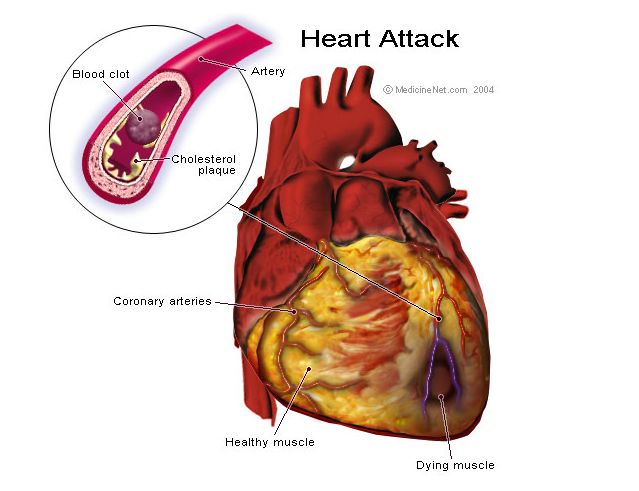
heart attack key points

1. Heart attack and strokes are major killers in all parts of the world. But they can often be prevented

2 You can project yourself from heart attacks and strokes by investing a little time and effort

3 Tobacco use an unhealthy diet and physical inactivity increase the risk of heart attacks and strokes

4 Stopping tobacco use reduce the chance of a heart attack or stroke from the moment you stop

5 Engaging in physical activity for a least 30 minutes on most days of the week will help help to keep away heart attacks and strokes

6 Eating at least 5 servings of fruits and vegetables a day and limiting your salt intake to less than one teaspoon a day can help to prevent heart attacks and strokes

7 High blood pressure has no symptoms but can cause a sudden stroke or heart attack. Have your blood pressure checked regularly.

8 Diabetes increase the risk of heart attacks and strokes if you have diabetes control your blood pressure and blood sugar to minimize your risk.

9 Being overweight increase the risk of heart attacks and strokes. To maintain an ideal body weight takes regular physical activity to eat and healthy diet.

10 heart attacks and strokes can strike suddenly and can be fatal if assistance is not sought immediately.

Understanding heart attacks and strokes
Every year about 12 million people throughout the world die of a heart attack or a stroke. These diseases affect the poor as well as the rich .Most people think that they are disease of middle aged men .the truth is that both men and women suffer from heart attacks and strokes . Women are much more at risk after menopause.
The good news is that you can take steps to help prevent heart attacks and strokes.

Top Ten Weight Loss Tips

Here is a list of the Top Ten Weight Loss Tips

1. There is no substitute for working out: If you are not going to work out, none of the pills, diets or anything is going to work for you. If you go on a diet without working out, your body thinks it's in a huge trouble and starts saving your fat instead of burning it. This is one thing that you absolutely must do in order to be successful with any weight loss plan. There is no quick and easy magic formula to weight loss if you do not work out.

2. Know what your ideal weight is: I know we would all love to look like those sexy models but knowing your ideal weight is very important. Think of weight loss as being healthy and not as become too skinny. The point is to make you feel good about yourself not to make you unhealthy because you don't have enough fat/muscles to support yourself.

3. Take those Pictures: I know taking those before pictures can be depressing but that's ok, at least they will keep you motivated at trying hard to achieve your goal. I would also recommend using Photoshop to create an after picture of yourself that you can put up on your walls so you can focus on your goals and feel motivated.

4. Know your limits: Install a little calorie counter on your computer or use a notebook to track your daily calorie limits. You need to plan your diet and know what you should and should not eat everyday before you start.

5. Read those labels: Yeah I know, reading those labels is boring but you have to do it if you want to stay on top and make sure that you are only consuming what is right and healthy for you.

6. Read up on Substitutes: There are substitutes for almost everything. Read up on those and make sure you are choosing the ones that are healthiest for you.

7. Tell everyone: I know it sounds intimidating but telling everyone will keep you motivated and help you stop procrastinating with your weight loss because all your friends will be watching your progress. It adds the little bit of pressure that almost everyone seems to need, especially procrastinators.

8. Join Online and Offline Support Groups: It's really helpful to talk to people who are doing the same thing. It keeps you motivated and also helps you make a lot of good friends. So, do not hesitate to join online and offline weight loss clubs.

9. Drink lots of water: Water is good for everyone and for everything. Water also helps you function at your peak which is what you need when you work out. Drinking lots of water balances your body. So, put up reminders or ask someone to remind you to drink lots of water.

10. Do it!: Don't be too scared of whether you can reach your goals or not, just get up and do it. You'll learn lots even if you don't succeed first. Nothing can be achieved by staying home and reading books and tips on weight loss unless you start taking actions.

Being healthy is about a lot more than just going on a diet. It does not help if you lose some weight and go back to junk food and lack of exercise. Healthy living is a lifestyle and I hope some of my tips above will help you not only with your weight loss but also with living a healthy life.

Tuesday, October 5, 2010

Exercise induced asthma

Exercise and sports that require continuous activity, especially running and cold-weather activities, can induce asthmatic symptoms. Exercise-induced asthma affects about 17 million Americans, many of which are children.

Symptoms include coughing, wheezing, chest tightness, breathing difficulty and shortness of breath. Children with exercise-induced asthma often start to experience symptoms five to 20 minutes after they begin to exercise.

Recognizing exercise-induced asthma in your child can be difficult because symptoms often take a subtle form. Your child may complain that he cannot run as quickly as friends or may express a dislike for sports. Avoiding sports or physical activity limits quality of life for some children and can lead to problems with fellow students and low self-esteem.

Sports that may act as triggers for exercise-induced asthma include soccer, basketball, field hockey, long-distance running, cross-country skiing and hockey.

"There is no cure for exercise-induced asthma," said Dr. Michael Kaliner, medical director of the Institute for Asthma and Allergy in Chevy Chase, Md. "But by preventing inflammation, you can successfully reduce the chances of having an asthmatic attack."

It is important for children to receive proper diagnosis and treatment.

"For children 5 years and older, one option is Intal," Kaliner said. "It works by preventing certain cells from releasing substances that may cause inflammation in the air passages. It is important to note that Intal should be used prior to engaging in exercise, as it cannot treat acute asthma attacks."

It is also a good idea to provide your child's gym teacher or coach with written instructions, including:

* The nature and severity of the exercise-induced asthma

* Which medicines are used to prevent it and how to use them

* Techniques to avoid exercise-induced asthma, including a sufficient warm-up period

* Warning signs when your child is experiencing an asthma attack

With appropriate management, most children are able to exercise and perform to their full ability.

The most common side effects from Intal therapy in controlled clinical studies were throat irritation or dryness, unpleasant taste, cough, wheeze and nausea. Intal Inhaler should not be used in patients who have shown hypersensitivity to cromolyn sodium or other ingredients in this product. Intal has no role in the treatment of an acute asthma attack.
Related Posts Plugin for WordPress, Blogger...

Chitika

My Blog List